The most reliable fix for dark spots is a serum built on tranexamic acid, stable vitamin C, or niacinamide, layered with light exfoliation and worn under daily SPF. Glow Reset Co.'s Vitamin C Brightening Serum checks every one of those boxes in a single, uncomplicated formula. Stick with it consistently, protect your skin from sun exposure, and most people notice a real shift in tone within four to eight weeks.
TL;DR:
- Serums containing tranexamic acid, stabilized vitamin C, or niacinamide, used with light exfoliation and daily SPF, reliably fade dark spots over time.
- Packaging that blocks light and air, along with transparent active concentrations, ensures the stability and effectiveness of brightening serums.
- Combining active ingredients like vitamin C and niacinamide is more tolerable, while stacking acids and retinoids often increases irritation risk.
- Consistent routine application, gradual introduction of actives, and diligent sun protection are key to seeing visible results within four to twelve weeks.
- Darker skin tones and sensitive skin require slower pacing, lower concentrations, and careful actives selection to avoid triggering post-inflammatory hyperpigmentation.
Table of Contents
- What to Look for in a Brightening Serum for Dark Spots
- Key Brightening Ingredients and How They Fade Dark Spots
- How to Layer a Brightening Serum Without Irritating Your Skin
- How Long Dark Spots Take to Fade and How to Track Progress
- Brightening Serums for Darker and Sensitive Skin Tones
- Recommended Vitamin C Brightening Serum and What to Pair With It
- Why Consistency Beats a Ten-Step Stack
- Simplify Your Brightening Routine With Glow Reset Co.
- Sources
- FAQ
What to Look for in a Brightening Serum for Dark Spots
Not every “brightening” serum earns the label. Some rely on fragrance and a nice bottle to imply results they can’t back up. Others cram in five exfoliating acids at once and call it “intensive,” which usually just means intense irritation.
Start with what the active ingredients actually target. Dark spots come from excess melanin sitting in the skin, so the actives worth paying for interrupt that process at the source or speed up the skin’s natural turnover so pigmented cells shed faster. Tranexamic acid works on the pigment-production pathway itself, while stable vitamin C derivatives and niacinamide support radiance and slow the transfer of pigment to surface cells, according to a clinical overview on skin lightening published through NCBI Bookshelf. Stronger acids like glycolic acid have a place, but they work on the surface, not the pigment reservoir underneath, so they’re a support player, not the main event.
Ingredient labels give away more than most people realize. A vitamin C serum near the top of an ingredient list in an unstable form, like plain L-ascorbic acid packaged in a clear bottle, is likely to oxidize fast and lose potency before the bottle’s even half empty. Editorial testing has repeatedly found that stabilized derivatives or encapsulated delivery systems hold up far better in real-world use than raw L-ascorbic acid, according to Marie Claire’s testing of brightening serums. That’s a formulation detail, not a marketing footnote.
Here’s what to check before you buy:
- Packaging that blocks light and air: opaque bottles and airless pumps protect unstable actives like vitamin C from degrading before you finish the product.
- Texture that suggests real emulsification: a serum that separates or feels gritty in the bottle often signals a poorly stabilized formula.
- Concentration transparency: brands that state their active percentages (even roughly) tend to be more credible than those hiding behind vague “brightening complex” language.
- A short, focused ingredient list: formulas piling on five or six actives at aggressive strengths are a red flag for irritation, not a sign of “more power.”
- No promises of overnight results: any serum claiming to erase dark spots in days is either overselling or overloaded with irritants that damage the skin barrier.
Skin type and pigmentation depth matter too. Shallow, sun-triggered spots respond well to surface exfoliation paired with vitamin C. Deeper, stubborn pigmentation, including melasma, responds better to tranexamic acid and niacinamide, which work below the surface layer.
Pro Tip: Check the ingredient list for where vitamin C sits relative to water. If it’s listed after five other ingredients, you’re likely getting a low, cosmetic dose rather than an active one.
Key Brightening Ingredients and How They Fade Dark Spots
Every brightening serum on the shelf leans on a small handful of actives, and each one works through a different mechanism. Knowing what each does helps you stop judging a serum by its marketing copy and start judging it by what’s actually inside.
Vitamin C is an antioxidant that interferes with the enzyme responsible for melanin production while also fighting the free-radical damage from UV exposure that triggers new pigment in the first place. The catch is stability. L-ascorbic acid, the “pure” form, is notoriously unstable and breaks down when exposed to light, air, or heat, turning a bottle the color of weak tea and losing much of its punch along the way. Derivatives like tetrahexyldecyl ascorbate or encapsulated forms sacrifice a little raw potency for a lot more shelf stability, which usually means better real-world results because you’re actually applying an active ingredient instead of an oxidized one.
Niacinamide works differently. Rather than attacking melanin production directly, it interrupts the transfer of pigment granules from melanin-producing cells to the surface skin cells where spots become visible. It also strengthens the skin barrier, which matters more than people assume, since a compromised barrier makes skin more reactive and more prone to producing defensive pigment in response to irritation.
Tranexamic acid has moved from a niche dermatology ingredient to a mainstream staple over the past few years, and for good reason. It works on the pigment-producing pathway from a different angle than antioxidants or exfoliants, making it especially useful for melasma and stubborn hormonal pigmentation that doesn’t respond well to vitamin C alone, according to InStyle’s testing of dark spot correctors. It’s also one of the gentler brightening actives, which is why it shows up in formulas meant for sensitive or reactive skin.
Exfoliating acids (glycolic, lactic, mandelic, and PHAs) don’t touch pigment production at all. They accelerate the shedding of surface skin cells, which fades existing surface discoloration faster and helps other actives penetrate more evenly. Glycolic acid is the strongest and fastest-acting of the bunch. Lactic acid is gentler and adds hydration as it exfoliates. Mandelic acid, with its larger molecular size, is the slowest to penetrate and generally the best-tolerated option for reactive or melanin-rich skin.
Kojic acid, arbutin, and peptides round out the category. Kojic acid and arbutin both inhibit the same enzyme vitamin C targets, but they’re typically formulated at lower strengths in serums, so expect a supporting role rather than a dramatic solo effect. Peptides don’t fade pigment directly, but some support collagen and barrier repair, which indirectly helps skin recover evenly after inflammation.
A quick reality check on combinations:
- Vitamin C plus niacinamide is one of the more forgiving, well-tolerated pairings for daily use.
- Tranexamic acid layers well under most other actives since it’s low on the irritation scale.
- Stacking glycolic acid with vitamin C in the same routine, same night, often backfires. Both are more effective at a lower pH, and stacking them can push irritation past what most skin barriers tolerate.
- Retinoids and strong exfoliating acids in the same routine need separation, either by alternating nights or by using one AM and the other PM.
Retail data backs up which of these actives actually dominate the category. Search top-selling brightening serums on Sephora’s dark spot product listings, and the same four ingredients keep surfacing: tranexamic acid, niacinamide, vitamin C, and gentle exfoliating acids. That’s not a coincidence. It’s what actually works, reflected in what people keep buying and repurchasing.
How to Layer a Brightening Serum Without Irritating Your Skin
Order and consistency matter more than most routines let on. A great serum applied at the wrong step, or paired with the wrong exfoliant on the same night, can undo weeks of progress.
Your AM routine:
- Cleanse with a gentle, non-stripping cleanser.
- Apply your brightening serum (vitamin C or niacinamide-based formulas work well in the morning) to slightly damp skin.
- Follow with a moisturizer to lock in hydration and buffer the active.
- Finish with a broad-spectrum SPF 30 or higher, applied generously and reapplied every two hours if you’re outdoors.
Your PM routine:
- Cleanse to remove sunscreen, makeup, and the day’s buildup.
- Apply exfoliating acids or tranexamic acid serum, depending on which night you’re targeting.
- Layer a moisturizer over top to counter any dryness from the active.
- Save retinoids for nights when you’re not also using a strong exfoliant.
If you’re starting a new active, especially an exfoliant or tranexamic acid formula, ease in. Apply every other night for the first two weeks, and only increase to nightly use if your skin shows no redness, flaking, or stinging. This slower pacing does more to prevent barrier damage than any “gentle formula” claim on a label, and it also lowers your risk of triggering the very post-inflammatory pigmentation you’re trying to fix.
Before committing to nightly use of anything new, patch-test on your inner arm or behind your ear for 48 hours. If you notice burning, swelling, or persistent redness after applying a new serum to your face, stop immediately and go back to a bare-bones routine of cleanser, moisturizer, and SPF until your skin calms down.

Sunscreen isn’t optional in this equation. Brightening actives make new pigment less likely to form, but unprotected UV exposure creates new pigment faster than any serum can fade the old spots. Skipping SPF while using a brightening serum is roughly equivalent to mopping a floor while the faucet’s still running.
Pro Tip: Set a recurring reminder for SPF reapplication if you tend to forget. Brightening actives without consistent sun protection is the single most common reason people feel like “nothing is working.”
How Long Dark Spots Take to Fade and How to Track Progress
Texture and overall radiance tend to improve first, often within two to four weeks of consistent use. That’s the skin barrier responding, cell turnover picking up pace, and surface dullness clearing out. The actual depth of pigment, especially anything sitting in the deeper dermal layers, takes longer, usually somewhere between four and twelve weeks or more, according to testing summarized by InStyle.
Several factors shift that timeline. Superficial, sun-triggered spots fade faster than deep, hormonal, or long-standing pigmentation like melasma. How consistently you apply the serum matters just as much as the formula itself, and sun exposure without SPF can stall or reverse progress entirely. Skin tone also plays a role, since melanin-rich skin can take longer to show visible lightening even when the underlying pigment is responding well to treatment.
Tracking progress accurately means removing guesswork from the equation:
- Take photos in the same lighting, same time of day, weekly.
- Note the date you started a new active so you’re not judging week two against a twelve-week benchmark.
- Track application frequency, since skipped nights are the most common reason for a stalled timeline.
- Mark specific spots on a simple skin map if you’re tracking more than one area.
If you’ve used a brightening serum consistently for three months with zero visible change, or if spots are darkening or spreading rather than fading, that’s a signal to stop guessing and see a dermatologist. Worsening pigmentation after starting a new active often points to irritation-triggered post-inflammatory hyperpigmentation rather than the original spot getting worse.
Brightening Serums for Darker and Sensitive Skin Tones
Darker skin tones carry a higher risk of post-inflammatory hyperpigmentation, meaning any irritation, from a too-strong exfoliant to an allergic reaction, can leave behind a new dark mark that’s often harder to treat than the original spot. That risk changes how brightening actives should be introduced.
Media testing and dermatology coverage consistently point to tranexamic acid and niacinamide as the more forgiving starting actives for melanin-rich skin, since both work with a lower irritation profile than aggressive exfoliants. When exfoliating acids are used, lower concentrations and slower pacing matter far more here than on lighter skin tones that tolerate irritation without the same pigment rebound.
A few practical rules for reducing risk:
- Introduce one new active at a time, not a full new routine overnight.
- Choose mandelic acid over glycolic acid if exfoliation is part of the plan, since its larger molecule penetrates more slowly and gently.
- Watch for early signs of irritation, redness, tightness, or stinging, and stop the product immediately rather than pushing through it.
- Prioritize barrier repair (a simple moisturizer, nothing fancy) any time skin feels reactive, before reintroducing actives.
- Avoid combining two strong actives (like a strong exfoliant and tranexamic acid) in the same session until you know how your skin responds to each individually.
If irritation shows up as swelling, blistering, or pigmentation that seems to be spreading rather than fading, that’s the point to stop self-treating and get a professional opinion. A dermatologist can also offer in-office options, like targeted peels or laser treatments, when topical actives alone aren’t moving stubborn pigment.
Pro Tip: If your skin reacts to a new brightening serum, resist the urge to “fight” the irritation with more actives. Strip back to a bare routine for a week, let the barrier recover, then reintroduce one active at a time.
Recommended Vitamin C Brightening Serum and What to Pair With It
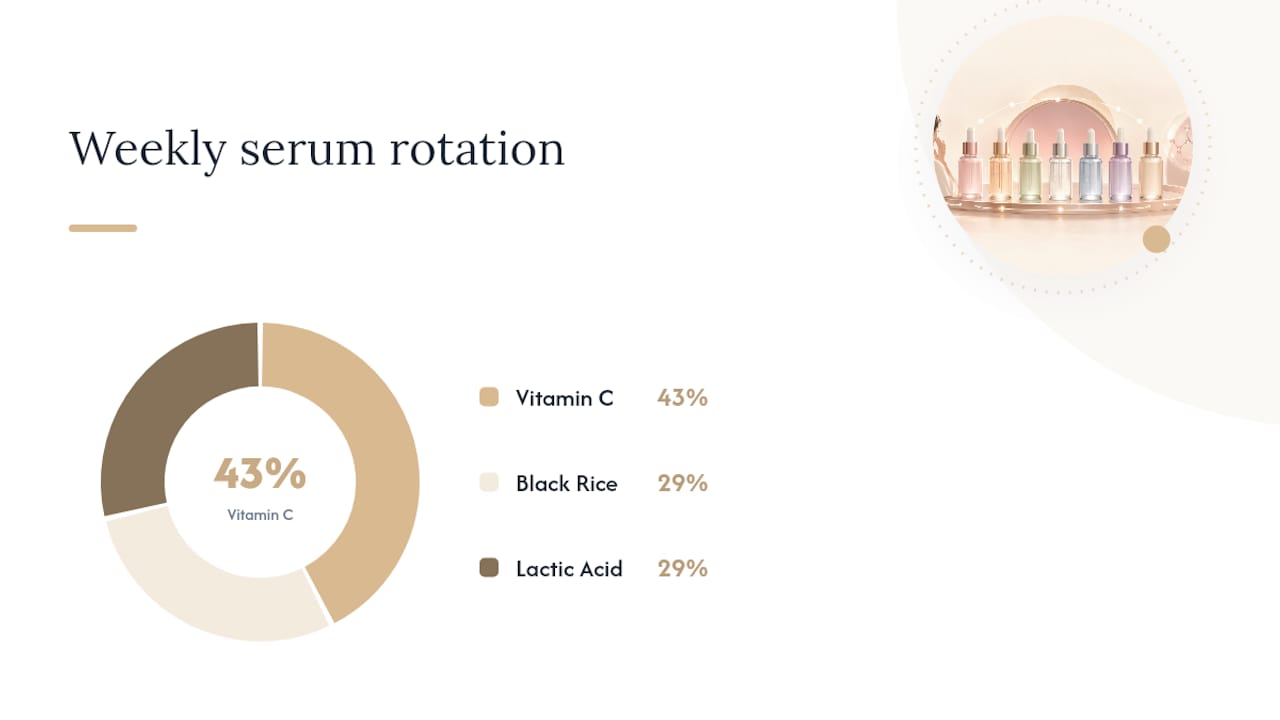
Glow Reset Co.'s Vitamin C Brightening Serum was built around the same criteria covered in the buying guide above: a stabilized active, a formula that doesn’t rely on a laundry list of ingredients to seem “powerful,” and packaging designed to keep the active potent from first use to last. It’s the kind of product that fits the brand’s broader stance: one well-chosen serum worth keeping in your routine, rather than five competing for space on your bathroom shelf.
Used on its own, the serum handles the antioxidant and radiance side of dark spot fading. Paired with the right complementary steps, it does more. Here’s a simple weekly framework:
| Night | Product | Purpose |
|---|---|---|
| Mon, Wed, Fri | Vitamin C Brightening Serum (AM) | Antioxidant protection and pigment-transfer support |
| Tue, Thu | Nida Black Rice Exfoliating Serum (PM) | Gentle surface exfoliation to speed cell turnover |
| Sat, Sun | Lactic Acid Hydrating Serum (PM) | Hydration plus mild exfoliation for recovery nights |
That rotation keeps exfoliation from overlapping with the vitamin C serum on the same night, which matters, since stacking both at full strength is one of the more common ways people irritate their skin instead of brightening it. The Lactic Acid Hydrating Serum works as a gentler alternative on nights when skin needs a break from stronger actives but you still want it to keep working. If you want a broader look at complementary steps beyond serums, the skin prep and facial tools collection rounds out the rest of a simplified routine.
Quick recap of why this combination works:
- The Vitamin C Brightening Serum handles antioxidant defense and radiance.
- The Nida Black Rice Exfoliating Serum manages surface renewal without daily strain on the barrier.
- The Lactic Acid Hydrating Serum offers a gentler exfoliation option that doubles as hydration support.
- Rotating rather than layering all three in one session keeps irritation risk low while still targeting pigment from multiple angles.
Why Consistency Beats a Ten-Step Stack
Most people trying to fade dark spots make the same mistake: they add ingredient after ingredient, hoping more actives mean faster results. In practice, the opposite tends to happen. Skin under constant assault from five overlapping actives spends more energy defending itself than actually repairing pigment, and irritation itself can trigger new dark marks that undo the progress you were chasing.
The stronger approach, and the one this guide keeps circling back to, is picking one or two targeted actives, matching them to your specific pigmentation type, and giving them real time to work under consistent sun protection. That’s a less exciting pitch than “brightening bundle,” but it’s the version that actually holds up over twelve weeks instead of collapsing into a red, flaky mess by week three.
A weekly snapshot worth keeping in mind: two to three nights of exfoliation, daily vitamin C or niacinamide in the morning under SPF, and one rest night where skin gets nothing but moisturizer. That rhythm, repeated for months rather than swapped out every time a new serum trends, is what separates visible fading from a shelf full of half-used bottles.
— Mariah
Simplify Your Brightening Routine With Glow Reset Co.
Some brands exist for exactly the situation this guide just walked through: too many brightening products claiming too much, and not enough clarity on what actually deserves a spot in your routine. Rather than stacking five half-strength actives, some curate one strong option per need, so you’re not gambling on an untested formula or guessing which ten-step routine is worth your money.

The Vitamin C Brightening Serum is the starting point for fading dark spots, and it pairs cleanly with the Nida Black Rice Exfoliating Serum or the gentler Lactic Acid Hydrating Serum for a rotation that targets pigment without overloading your skin barrier. If you’re ready to trade a cluttered shelf for a routine that actually gets finished, browse the full skincare edit and build a routine around a small number of products worth keeping.
Sources
The NCBI clinical overview on skin lightening covers the pigment-pathway mechanisms behind tranexamic acid, vitamin C, and niacinamide in more technical depth. Marie Claire’s brightening serum testing breaks down why formula stability separates serums that work from ones that oxidize into uselessness. InStyle’s dark spot corrector testing offers a practical look at realistic timelines and the non-negotiable role of SPF. Sephora’s dark spot serum listings show which active ingredients dominate top-selling formulas in the real market.
- A clinical overview on skin lightening and pigment pathways — NCBI Bookshelf
- 10 Best Brightening Serums to Lighten Dark Spots, Reviewed — Marie Claire
- 13 Best Dark Spot Correctors of 2026, Tested and Reviewed — InStyle
FAQ
What is the best brightening serum for dark spots?
The best option pairs an active that targets pigment production, like tranexamic acid or stabilized vitamin C, with daily SPF. Glow Reset Co.'s Vitamin C Brightening Serum meets that standard with a stable, well-packaged formula built for consistent daily use.
What serum is best for dark spots on darker skin tones?
Gentler actives like tranexamic acid and niacinamide tend to work best on melanin-rich skin, since they carry a lower risk of triggering post-inflammatory hyperpigmentation than aggressive exfoliants. Introduce any new active slowly, every other night at first, and pair it with a barrier-supporting moisturizer.
What serum can I use to brighten dark spots?
A serum combining vitamin C, niacinamide, or tranexamic acid addresses dark spots through different mechanisms, from antioxidant defense to interrupting pigment transfer. Consistent use alongside broad-spectrum SPF is what turns any of these formulas into visible results rather than wasted product.
What is the best serum for removing dark spots?
No serum removes dark spots overnight. The most effective approach fades them gradually over roughly four to twelve weeks, depending on pigment depth, using actives like tranexamic acid or stabilized vitamin C combined with strict sun protection, according to testing from InStyle.
How long does it take to see results from a brightening serum?
Texture and radiance often improve within two to four weeks, while deeper pigment changes typically take four to twelve weeks or longer with consistent use. Skipping sunscreen during this window is the most common reason results stall.